Smart Glasses and 5G Connectivity The Next Frontier
Discover how 5G connectivity will revolutionize smart glasses, enabling faster data and new applications.
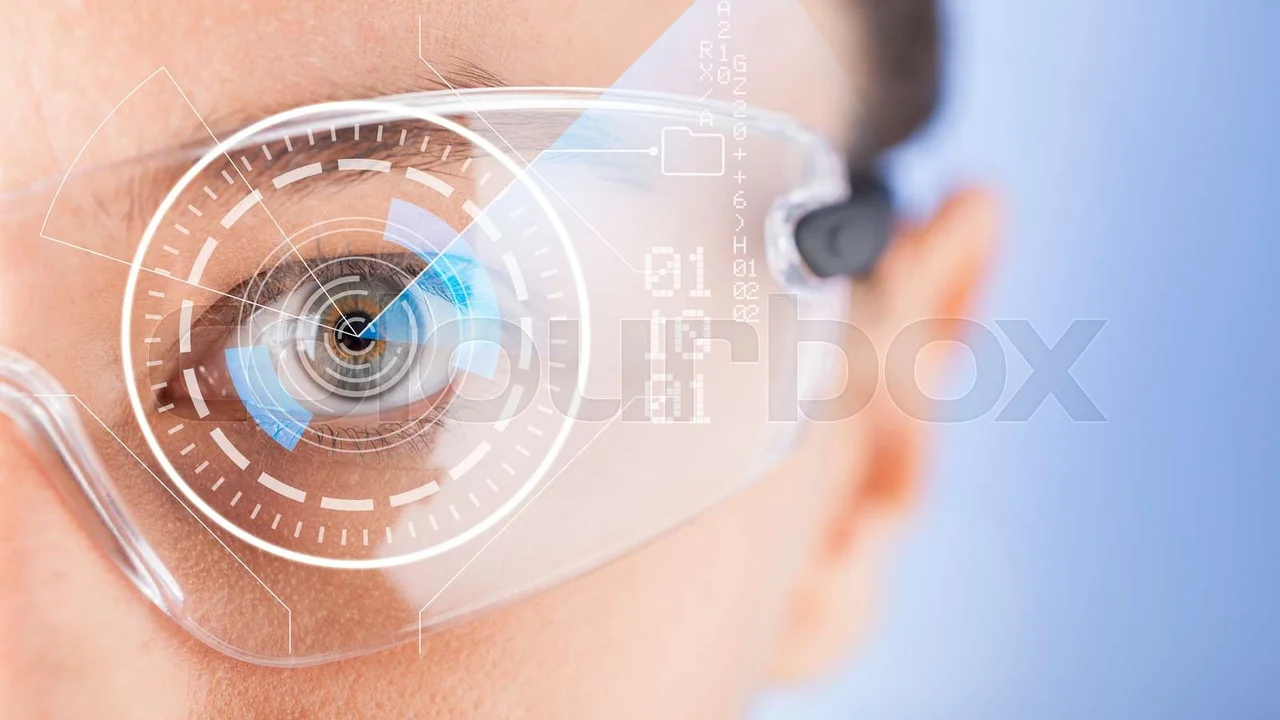
Discover how 5G connectivity will revolutionize smart glasses, enabling faster data and new applications.
Smart Glasses and 5G Connectivity The Next Frontier
Hey everyone, let's talk about something super exciting that's going to change the game for smart glasses: 5G connectivity. We've all heard about 5G, right? Faster internet, lower latency, all that good stuff. But when you combine it with smart glasses, it's not just about quicker downloads; it's about unlocking a whole new universe of possibilities. Imagine your smart glasses becoming even smarter, more responsive, and capable of things we can only dream of with current wireless tech. That's the promise of 5G for smart glasses, and it's a big one.
The Need for Speed Why 5G Matters for Smart Glasses
So, why is 5G such a big deal for smart glasses specifically? Well, smart glasses are inherently data-hungry devices. They're constantly processing visual information, often in real-time, and frequently interacting with cloud-based services for things like AI processing, augmented reality overlays, and streaming high-definition content. Current Wi-Fi and older cellular networks, while functional, often hit a wall when it comes to the sheer volume and speed of data required for truly seamless, immersive experiences. Think about it: if you're trying to overlay complex 3D models onto the real world, or stream a live 4K video feed directly to your eyes, any lag or buffering is going to ruin the experience. That's where 5G steps in. Its incredible bandwidth and ultra-low latency mean that data can travel to and from your smart glasses almost instantaneously. This isn't just about making things a bit faster; it's about enabling applications that simply weren't feasible before.
Unlocking New Applications Real World Scenarios with 5G Smart Glasses
Let's get into some concrete examples of how 5G is going to transform the way we use smart glasses. This is where it gets really interesting.
Enhanced Augmented Reality and Mixed Reality Experiences
This is probably the most obvious and impactful area. With 5G, augmented reality (AR) and mixed reality (MR) experiences on smart glasses will become incredibly rich and responsive. Imagine walking through a city and having detailed, real-time information about buildings, historical facts, or even restaurant menus overlaid perfectly onto your view, all streamed from the cloud without a hitch. For industrial applications, technicians could receive complex 3D schematics or step-by-step repair instructions directly in their field of view, with the data being rendered and updated in real-time from a remote server. This means less processing power needed on the glasses themselves, leading to lighter, more comfortable designs and longer battery life. Products like the Microsoft HoloLens 2, while already powerful, would see their capabilities significantly boosted by 5G, allowing for even more complex collaborative AR environments without the need for local processing power. Similarly, future consumer-focused AR glasses from companies like Apple or Meta (Project Cambria/Quest Pro), which are heavily rumored to rely on cloud processing for their most advanced features, will absolutely thrive on 5G networks.
Real Time Cloud AI Processing and Intelligent Assistants
Smart glasses are becoming increasingly intelligent, thanks to integrated AI. But running complex AI models on a tiny device strapped to your face is challenging. 5G changes this by allowing smart glasses to offload heavy AI processing to powerful cloud servers. This means your smart glasses can have access to virtually unlimited computational power for tasks like real-time language translation, advanced object recognition, complex facial recognition (with privacy considerations, of course), and highly sophisticated intelligent assistants. Imagine asking your glasses a complex question about something you're looking at, and getting an instant, detailed answer, powered by a massive AI model in the cloud. This could be transformative for education, tourism, and even everyday tasks. While specific 5G-enabled AI smart glasses aren't widely available yet, the groundwork is being laid. Devices like the Ray-Ban Stories, which already integrate some AI for photo/video capture and voice commands, would see their AI capabilities expand dramatically with 5G, allowing for more sophisticated on-the-fly analysis and interaction.
High Quality Live Streaming and Communication
For professionals in fields like healthcare, engineering, or remote assistance, 5G-enabled smart glasses will revolutionize live streaming and communication. A surgeon could stream a high-definition, real-time view of a procedure to a specialist across the globe, who could then provide immediate visual guidance. Field technicians could share their exact perspective with experts back at the office, receiving visual annotations and instructions directly in their view. The low latency of 5G ensures that these interactions are smooth and immediate, crucial for critical applications. The Vuzix Blade Upgraded or RealWear HMT-1, which are already used in enterprise settings for remote assistance, would become even more powerful tools with reliable 5G connectivity, enabling higher resolution streams and more responsive interactions.
Immersive Gaming and Entertainment On The Go
Forget mobile gaming on your phone; imagine truly immersive AR games played through your smart glasses, with complex graphics and interactive elements rendered in the cloud and streamed seamlessly to your eyes. 5G's low latency is key here, as even a slight delay can ruin the gaming experience. This also opens up possibilities for streaming high-quality video content directly to your glasses, turning any environment into your personal cinema. Think about the potential for cloud gaming services like Xbox Cloud Gaming or Google Stadia (RIP) but directly integrated into your eyewear. While consumer AR gaming glasses are still nascent, companies like Nreal with their Nreal Air glasses are already pushing the boundaries of what's possible with current connectivity, and 5G will only accelerate this.
Comparing the Landscape Current Smart Glasses and Their 5G Potential
While dedicated 5G smart glasses are still emerging, many current models are designed with future connectivity in mind or could greatly benefit from being tethered to a 5G-enabled smartphone. Let's look at a few and discuss their potential with 5G.
Microsoft HoloLens 2
- Current Connectivity: Wi-Fi, Bluetooth. Often used in enterprise settings with robust local networks.
- 5G Potential: Massive. HoloLens 2 is a powerful mixed reality device, but its most demanding applications often require significant local processing or a strong Wi-Fi connection. With 5G, complex 3D models, real-time collaborative environments, and extensive cloud-based AI processing could be offloaded, making the device lighter, more power-efficient, and capable of truly untethered, high-fidelity MR experiences anywhere there's 5G coverage. This would be a game-changer for remote assistance, design, and training in the field.
- Estimated Price: Around $3,500 for the Development Edition.
Vuzix Blade Upgraded
- Current Connectivity: Wi-Fi, Bluetooth.
- 5G Potential: Significant. Vuzix Blade is designed for enterprise and prosumer use, often for remote assistance, data display, and notifications. 5G would enable higher resolution video streaming for remote support, faster data synchronization with cloud platforms, and more responsive voice commands powered by cloud AI. This would enhance its utility in logistics, field service, and manufacturing.
- Estimated Price: Around $999.
Nreal Air
- Current Connectivity: USB-C tethered to a compatible smartphone (which can be 5G enabled).
- 5G Potential: High. Nreal Air acts as a portable display for your phone, offering a large virtual screen for media consumption and some AR apps. When connected to a 5G phone, the Nreal Air can leverage the phone's 5G connection to stream high-quality video, cloud games, and more demanding AR content with minimal latency. This makes it an excellent companion for on-the-go entertainment and productivity, especially for cloud-based applications.
- Estimated Price: Around $379.
Ray-Ban Stories
- Current Connectivity: Bluetooth, Wi-Fi for syncing.
- 5G Potential: Moderate to High. Ray-Ban Stories are primarily for capturing photos/videos and audio. While they don't have a display for AR, 5G could significantly speed up the syncing of captured media to the cloud, enable higher quality live streaming from the glasses, and potentially allow for more sophisticated, real-time AI processing of audio and visual input (e.g., advanced voice commands, real-time scene analysis) if future iterations include more advanced sensors.
- Estimated Price: Around $299.
Future Smart Glasses (e.g., Apple, Meta, Google)
- Current Connectivity: Not yet released, but heavily rumored to integrate advanced wireless tech.
- 5G Potential: Crucial. Major tech companies are investing heavily in smart glasses, and 5G is expected to be a foundational technology for their most ambitious projects. These devices are likely to rely heavily on cloud computing for complex AR rendering, AI processing, and seamless integration with digital ecosystems. 5G will be essential for delivering the low-latency, high-bandwidth experiences that consumers will expect from next-generation smart glasses.
- Estimated Price: Speculative, likely in the premium range ($500 - $2000+).
The Technical Deep Dive How 5G Achieves This
Let's briefly touch on the technical aspects that make 5G so revolutionary for smart glasses.
Millimeter Wave (mmWave) and Sub-6 GHz
5G operates on different frequency bands. Sub-6 GHz 5G offers better coverage and penetration, similar to current cellular networks, but with higher speeds. Millimeter Wave (mmWave) 5G, on the other hand, offers incredibly high speeds and massive bandwidth but has a shorter range and is more susceptible to obstacles. For smart glasses, a combination of both will be crucial. mmWave could provide ultra-fast, low-latency connections in dense urban areas or specific enterprise environments, while Sub-6 GHz would ensure broader coverage for more general use cases.
Ultra-Reliable Low Latency Communication (URLLC)
This is a key feature of 5G. URLLC ensures that data packets are delivered with extremely low latency and high reliability. For smart glasses, this means that augmented reality overlays appear instantly, voice commands are processed without delay, and real-time interactions feel natural and seamless. This is critical for applications where even a few milliseconds of delay can disrupt the user experience or compromise safety.
Massive MIMO (Multiple Input, Multiple Output)
Massive MIMO technology uses a large number of antennas at the base station to send and receive data simultaneously to multiple users. This significantly increases network capacity and efficiency, meaning more smart glasses users can be connected at high speeds in the same area without experiencing slowdowns. This is vital for public spaces, events, or large enterprise deployments where many devices might be active at once.
Network Slicing
Network slicing allows mobile operators to create virtual, isolated networks tailored to specific applications. For smart glasses, this means a dedicated 'slice' of the 5G network could be allocated for critical AR applications, ensuring guaranteed bandwidth and low latency, even when the rest of the network is congested. This is particularly important for enterprise and industrial use cases where performance is paramount.
Edge Computing Integration
While not strictly a 5G technology, edge computing works hand-in-hand with 5G to bring computational power closer to the user. Instead of sending all data to a distant cloud server, some processing can happen at the 'edge' of the network (e.g., at a local base station or a nearby server). This further reduces latency and improves responsiveness for smart glasses, especially for highly interactive AR experiences or real-time AI processing.
Challenges and Considerations The Road Ahead for 5G Smart Glasses
It's not all smooth sailing, of course. There are still some hurdles to overcome before 5G smart glasses become truly ubiquitous.
5G Network Coverage and Infrastructure
While 5G is expanding rapidly, widespread, consistent, and high-performance 5G coverage (especially mmWave) is still not universal. For smart glasses to be truly useful anywhere, the underlying 5G infrastructure needs to be robust and pervasive. This is a massive undertaking that will take time and significant investment from telecom companies.
Battery Life and Power Consumption
While offloading processing to the cloud can save battery life on the glasses themselves, maintaining a constant, high-bandwidth 5G connection can still be power-intensive. Manufacturers will need to continue innovating in battery technology and power management to ensure smart glasses can last a full day on a single charge, even with heavy 5G usage.
Cost of 5G Data Plans
High-bandwidth 5G data plans can be expensive, especially if smart glasses are constantly streaming large amounts of data. This could be a barrier to widespread consumer adoption. Telecom providers will need to offer competitive pricing and data packages that make sense for smart glasses users.
Privacy and Security Concerns
As smart glasses become more connected and capable of real-time data processing and sharing, privacy and security become even more critical. Ensuring that personal data is protected, and that the devices are secure from cyber threats, will be paramount. This includes data transmitted over 5G networks and data processed in the cloud.
Regulatory and Ethical Frameworks
The advanced capabilities enabled by 5G smart glasses, such as pervasive AR and real-time AI, will necessitate new regulatory and ethical discussions. Questions around public recording, facial recognition, and data collection will need to be addressed to ensure responsible development and deployment of these technologies.
The Future is Connected What to Expect Next
Despite the challenges, the trajectory is clear: 5G is not just an upgrade for smart glasses; it's a fundamental enabler. We're moving towards a future where our digital and physical worlds are seamlessly intertwined, and smart glasses, powered by 5G, will be a primary interface for that convergence. Expect to see more dedicated 5G-enabled smart glasses emerge in the coming years, offering truly untethered, high-fidelity augmented and mixed reality experiences. The lines between our devices will blur, and our smart glasses will become our most personal and powerful computing companions, always connected, always intelligent, and always ready to enhance our perception of the world. It's an exciting time to be alive, and 5G smart glasses are definitely a big part of that future.
:max_bytes(150000):strip_icc()/277019-baked-pork-chops-with-cream-of-mushroom-soup-DDMFS-beauty-4x3-BG-7505-5762b731cf30447d9cbbbbbf387beafa.jpg)