The Evolution of Smart Glasses From Concept to Reality
Trace the journey of smart glasses from early concepts to the advanced devices available today.

Trace the journey of smart glasses from early concepts to the advanced devices available today.
The Evolution of Smart Glasses From Concept to Reality
Early Concepts and Visionary Ideas: The Dawn of Wearable Computing
Before smart glasses became a tangible product, they existed as a concept in the minds of science fiction writers and visionary engineers. The idea of augmenting human perception and interaction with digital information has been a recurring theme in literature and film for decades. Think of the futuristic displays in movies like 'Minority Report' or the heads-up displays in fighter jets – these were early inspirations for what smart glasses could eventually become. The fundamental desire was to seamlessly integrate digital data into our visual field, allowing for hands-free access to information without the need for a separate screen or device.
Early attempts at wearable computing in the 1980s and 1990s, while rudimentary by today's standards, laid the groundwork. These often involved bulky head-mounted displays connected to external computers, far from the sleek, everyday glasses we envision today. However, they proved the feasibility of projecting information directly into a user's line of sight. Researchers at institutions like MIT's Media Lab were at the forefront, experimenting with wearable cameras, displays, and processors, pushing the boundaries of what was then possible. These pioneering efforts, though limited by the technology of their time, were crucial in establishing the foundational principles of wearable augmented reality.
The Google Glass Era: A Public Introduction and Its Challenges
The year 2013 marked a significant turning point with the public introduction of Google Glass. This was arguably the first time smart glasses entered mainstream consciousness, generating immense excitement and debate. Google Glass promised a future where notifications, navigation, and even photography could be accessed with a simple glance or voice command. It featured a small prism display that projected information into the wearer's upper right visual field, a camera for capturing photos and videos, and a bone-conduction speaker for audio.
The initial 'Explorer Program' allowed developers and early adopters to experiment with the device, leading to a flurry of innovative applications. However, Google Glass also faced significant challenges. Its high price point (around $1,500), limited battery life, and somewhat conspicuous design were immediate hurdles. More importantly, privacy concerns quickly emerged. The integrated camera, capable of recording discreetly, led to the coining of the term 'Glassholes' and bans in various public and private establishments. This public backlash, coupled with a lack of clear consumer use cases beyond novelty, led Google to halt the consumer version of Glass in 2015. Despite its commercial struggles, Google Glass was a pivotal moment. It demonstrated the potential of smart glasses while also highlighting the critical importance of design, privacy, and a well-defined value proposition for mass adoption.
Post-Google Glass: Shifting Focus to Enterprise and Niche Markets
Following the consumer setback of Google Glass, many companies pivoted their smart glasses development towards enterprise and niche markets. The privacy concerns and design limitations that plagued consumer adoption were less pronounced in controlled professional environments. In industries like manufacturing, logistics, healthcare, and field service, the benefits of hands-free information access, remote assistance, and guided workflows became clear.
For example, companies like Vuzix and Epson (with their Moverio series) continued to develop smart glasses primarily for industrial applications. These devices often featured more robust designs, better battery life, and specialized software tailored for specific tasks. Google itself re-entered the market with the Google Glass Enterprise Edition, focusing on improving its utility for businesses. These enterprise-focused smart glasses proved invaluable for tasks such as remote expert assistance, where a technician in the field could receive real-time visual guidance from an expert located elsewhere, or for assembly line workers who could follow digital instructions overlaid on their physical workspace.
This shift allowed manufacturers to refine the technology, improve ergonomics, and develop more powerful software platforms without the immediate pressure of mass consumer appeal. It also provided valuable insights into real-world use cases and the specific requirements for different industries, paving the way for future consumer-oriented devices.
The Rise of Audio Smart Glasses: Blending Tech with Everyday Wearables
While enterprise smart glasses focused on visual augmentation, another segment of the market began to emerge: audio smart glasses. These devices prioritized integrating audio functionality, like speakers and microphones, into traditional eyewear, often with a more subtle design. The goal was to offer a hands-free audio experience for calls, music, and voice assistants, without the need for earbuds or headphones.
A prime example of this trend is the Amazon Echo Frames. These glasses look like regular spectacles but integrate Alexa, allowing users to make calls, send messages, set reminders, and control smart home devices using voice commands. Similarly, Bose released its Frames line, offering high-quality audio through small speakers embedded in the temples, directing sound towards the wearer's ears while minimizing leakage to others. Ray-Ban, in collaboration with Meta (formerly Facebook), launched Ray-Ban Stories, which combine classic Ray-Ban designs with integrated cameras for capturing photos and short videos, along with audio capabilities for calls and music. These devices represent a more cautious approach to smart glasses, focusing on familiar functionalities (audio, basic photography) within a socially acceptable form factor.
The appeal of audio smart glasses lies in their discretion and convenience. They offer a seamless way to interact with digital content and communicate without pulling out a phone, making them ideal for everyday use, commuting, and light activity. While they don't offer the full visual AR experience of more advanced smart glasses, they serve as an important bridge, familiarizing consumers with the concept of connected eyewear and paving the way for more visually rich experiences in the future.
Recommended Audio Smart Glasses:
-
Ray-Ban Stories (Meta)
- Use Case: Casual photography, short video capture, music listening, phone calls, voice assistant interaction. Great for social sharing and capturing moments hands-free.
- Comparison: Offers a more integrated camera experience than most audio-only glasses. Design is very close to traditional Ray-Ban frames.
- Price: Starting around $299 USD.
-
Amazon Echo Frames (3rd Gen)
- Use Case: Hands-free Alexa access, music, podcasts, phone calls. Ideal for those deeply integrated into the Amazon ecosystem.
- Comparison: Focuses heavily on voice assistant integration. Lacks a camera, which might appeal to privacy-conscious users.
- Price: Around $269 USD.
-
Bose Frames (various models like Tempo, Soprano, Tenor)
- Use Case: High-quality open-ear audio for music and calls, especially good for outdoor activities where situational awareness is important.
- Comparison: Known for superior audio quality compared to many competitors. Different styles cater to various preferences.
- Price: Ranging from $199 to $249 USD depending on the model.
Current Landscape: Augmented Reality Smart Glasses and Their Niche
Today, the smart glasses market is characterized by a diverse range of products, with a growing emphasis on augmented reality (AR) capabilities. Unlike virtual reality (VR) headsets that completely immerse users in a digital world, AR smart glasses overlay digital information onto the real world, enhancing perception rather than replacing it. This technology holds immense promise for various applications, from navigation and information display to gaming and professional tools.
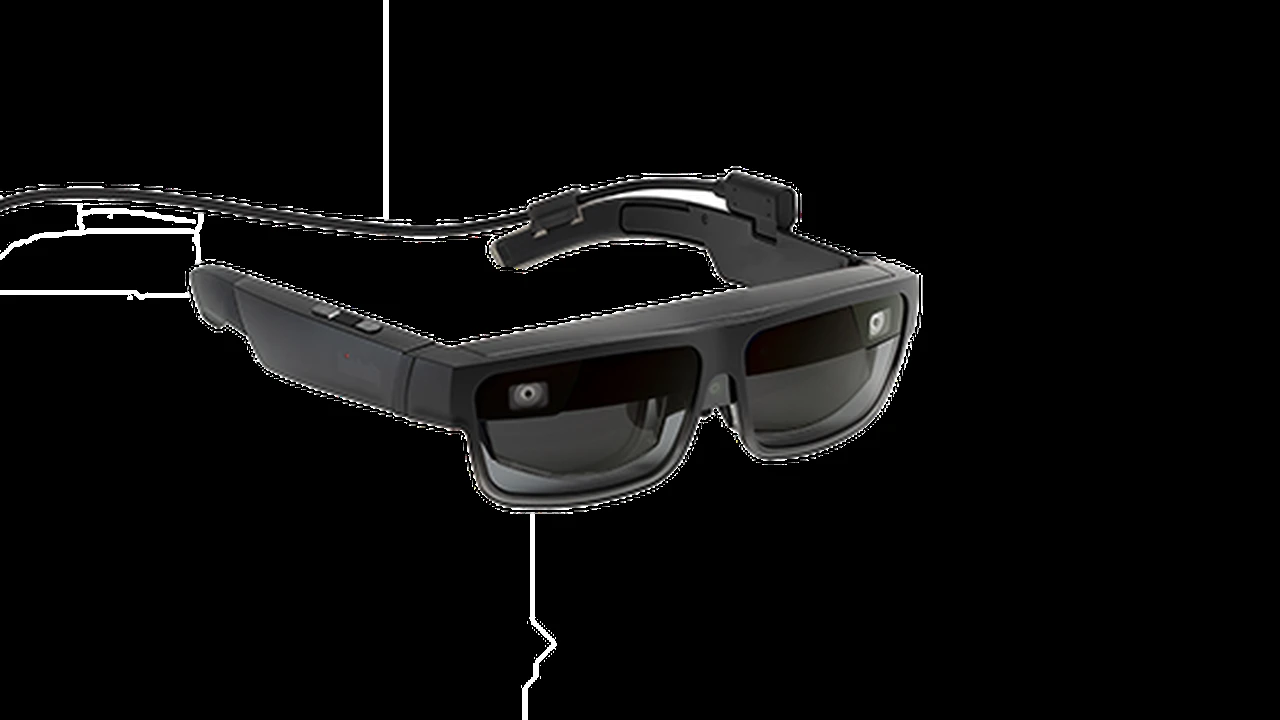
Companies like Nreal (now XREAL) with their Air glasses, and Rokid with their Air and Max models, are leading the charge in consumer-oriented AR smart glasses. These devices typically connect to a smartphone or a dedicated computing unit and project a virtual screen or 3D objects into the user's field of view. They are often used for watching movies on a large virtual screen, playing AR games, or even for productivity by extending a computer's display. The form factor is becoming increasingly refined, resembling slightly bulkier sunglasses, making them more socially acceptable than earlier AR headsets.
In the enterprise space, devices like Microsoft HoloLens 2 continue to push the boundaries of mixed reality (MR), which blends AR with the ability to interact with virtual objects as if they were physically present. These high-end devices are primarily used in industrial design, medical training, and complex maintenance tasks, offering unparalleled spatial computing capabilities.
The challenge for AR smart glasses remains balancing display quality, field of view, battery life, and a comfortable, stylish form factor at an accessible price point. However, the progress in miniaturization and display technology is rapid, making these devices increasingly viable for a wider range of applications.
Recommended Augmented Reality Smart Glasses:
-
XREAL Air (formerly Nreal Air)
- Use Case: Portable big screen for media consumption (movies, streaming), cloud gaming, and extending smartphone/computer displays. Excellent for travel and personal entertainment.
- Comparison: One of the most popular and relatively affordable consumer AR glasses. Known for its comfortable fit and vibrant display. Requires a compatible smartphone or adapter.
- Price: Around $379 USD.
-
Rokid Air / Rokid Max
- Use Case: Similar to XREAL Air, offering a large virtual screen for entertainment and productivity. Rokid Max offers a higher refresh rate and brightness.
- Comparison: Direct competitor to XREAL Air. Rokid Max provides a slightly more premium viewing experience.
- Price: Rokid Air around $399 USD, Rokid Max around $439 USD.
-
Vuzix Blade 2
- Use Case: Primarily enterprise-focused for hands-free information access, remote assistance, and workflow guidance in industrial settings. Can also be used for notifications and basic AR.
- Comparison: More robust and designed for professional use. Features a full-color waveguide display.
- Price: Around $1,299 USD.
-
Microsoft HoloLens 2
- Use Case: High-end mixed reality for complex industrial applications, medical training, design, and remote collaboration.
- Comparison: Industry leader in mixed reality, offering advanced spatial computing and gesture recognition. Very expensive and primarily for enterprise.
- Price: Around $3,500 USD.
Key Technological Advancements Driving Smart Glasses Evolution
The journey from concept to reality for smart glasses has been propelled by significant advancements across several key technological domains. These innovations are not only making smart glasses more functional but also more compact, efficient, and user-friendly.
Display Technologies: Miniaturization and Clarity
The display is arguably the most critical component of any smart glass. Early prototypes struggled with bulky projectors and limited fields of view. Today, we see a variety of sophisticated display technologies being employed:
- Waveguide Displays: These are thin, transparent optical elements that guide light from a tiny projector to the wearer's eye. They allow for a compact and relatively transparent lens, making the glasses look more like regular eyewear. Examples include Vuzix Blade and Microsoft HoloLens.
- Birdbath Optics: Used in devices like XREAL Air and Rokid Air, this design uses a series of mirrors to reflect an image from a micro-OLED display into the user's eye, creating a large virtual screen effect. While it can make the lenses appear darker, it offers excellent image quality and a wide field of view for media consumption.
- Micro-LED and Micro-OLED: These tiny, high-resolution displays are crucial for smart glasses. They offer high brightness, contrast, and pixel density in a very small form factor, enabling crisp and vibrant images without adding significant bulk.
The ongoing development in these areas is focused on increasing resolution, expanding the field of view, improving transparency, and reducing power consumption, all while making the optics smaller and lighter.
Sensors and Tracking: Understanding the World Around Us
For smart glasses to effectively overlay digital information onto the real world, they need to understand their environment and the user's movements. This is where an array of sophisticated sensors comes into play:
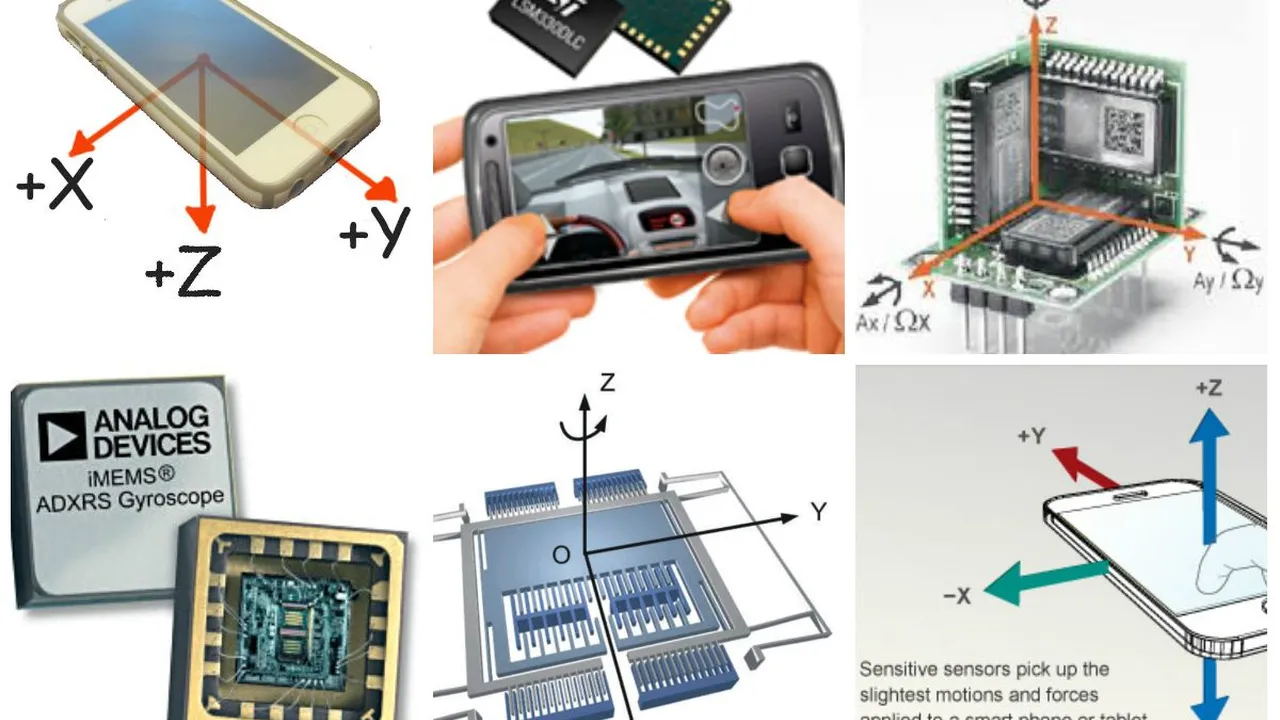
- Accelerometers and Gyroscopes: These inertial measurement units (IMUs) track the wearer's head movements, allowing the digital content to remain stable and correctly oriented in the field of view.
- Magnetometers: Provide compass-like functionality, helping with orientation and navigation.
- Cameras: Beyond capturing photos and videos, cameras are essential for 'computer vision.' They enable simultaneous localization and mapping (SLAM), allowing the glasses to understand their position and orientation within a 3D space. This is crucial for anchoring virtual objects to real-world surfaces.
- Depth Sensors (e.g., LiDAR, Time-of-Flight): Found in more advanced AR/MR glasses, these sensors measure distances to objects, creating a 3D map of the environment. This allows virtual objects to interact realistically with the physical world, such as being occluded by real objects or casting shadows.
- Eye Tracking: Some advanced smart glasses incorporate eye-tracking technology, which can be used for more intuitive user interfaces (e.g., selecting items by looking at them) or for foveated rendering, where only the area the user is looking at is rendered in high resolution, saving computational power.
Connectivity and Processing Power: The Brains of the Operation
Modern smart glasses require significant processing power to render complex AR experiences and manage various sensors. While some high-end devices have onboard processors, many consumer AR glasses leverage the processing power of connected smartphones via USB-C. This offloads the heavy computational tasks, allowing the glasses themselves to remain lighter and more power-efficient.
5G connectivity is also playing a crucial role. The low latency and high bandwidth of 5G enable cloud-based rendering and real-time data streaming, which is essential for complex AR applications that require constant interaction with remote servers or large datasets. This means that even less powerful glasses can access sophisticated AR experiences by relying on cloud computing.
Battery Technology: Powering the Future
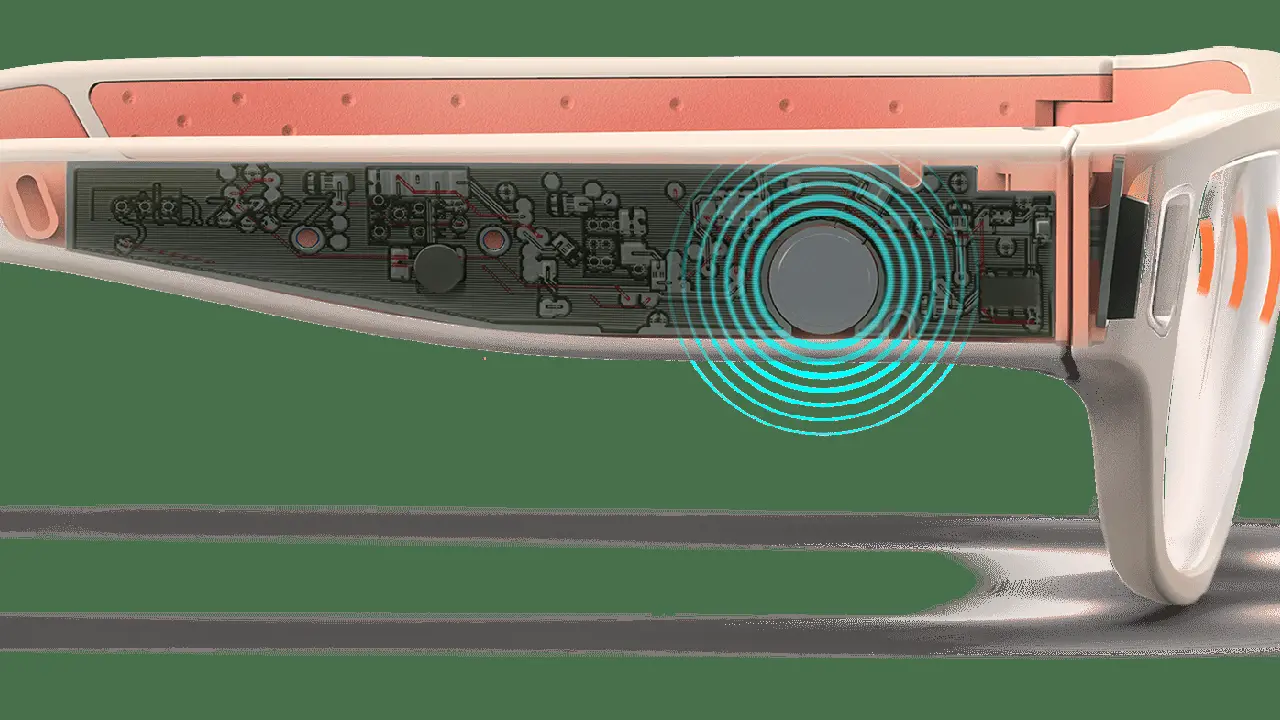
Battery life remains a significant challenge for smart glasses. The desire for sleek, lightweight designs often conflicts with the need for long-lasting power. Innovations in battery chemistry and energy management are crucial. Many current smart glasses rely on small, high-density lithium-ion batteries, often distributed within the temples of the frames to maintain balance and comfort. The trend is towards more efficient components and smarter power management software to extend usage time without increasing bulk.
The Future of Smart Glasses: Integration and Ubiquity
Looking ahead, the evolution of smart glasses is poised for even more transformative changes. The ultimate goal is to create devices that are indistinguishable from regular eyewear, offering seamless integration of digital information into our daily lives without being intrusive or distracting.
Seamless Integration into Daily Life: The 'Invisible' Computer
The future of smart glasses lies in their ability to become 'invisible technology.' This means not only a design that blends effortlessly with fashion but also a user experience that feels natural and intuitive. Imagine glasses that can subtly display navigation directions as you walk, translate foreign languages in real-time as you converse, or provide contextual information about objects you see, all without requiring explicit commands or drawing attention to the technology itself. This level of integration will require advancements in contextual AI, allowing the glasses to anticipate your needs and provide relevant information proactively.
The Metaverse and Spatial Computing: A New Frontier
Smart glasses are widely considered to be the primary interface for accessing the metaverse – a persistent, interconnected virtual world. While VR headsets offer full immersion, AR smart glasses will allow users to blend the physical and digital worlds, bringing elements of the metaverse into our everyday environments. This could involve interacting with virtual avatars in your living room, collaborating on 3D models that appear to float in front of you, or experiencing immersive entertainment that overlays onto your surroundings. Spatial computing, the ability to understand and interact with digital content in a 3D physical space, will be at the core of this experience, and smart glasses are the ideal platform for it.
Health and Wellness Monitoring: Beyond Fitness Trackers
Beyond visual and audio augmentation, future smart glasses are likely to incorporate advanced health and wellness monitoring capabilities. Imagine glasses that can track your eye health, detect early signs of certain conditions through subtle physiological changes, or even monitor your stress levels and suggest relaxation techniques. Integration with biometric sensors could allow for continuous monitoring of heart rate, body temperature, and other vital signs, providing proactive health insights. This could transform smart glasses into essential health companions, offering personalized feedback and alerts.
Ethical Considerations and Societal Impact: Navigating the New Normal
As smart glasses become more ubiquitous, the ethical considerations surrounding their use will become even more critical. Privacy will remain a paramount concern, particularly regarding integrated cameras and the collection of personal data. Developers and manufacturers will need to implement robust privacy-by-design principles, giving users clear control over their data and ensuring transparency about what information is being collected and how it's used. Societal norms will also evolve as people become accustomed to interacting with individuals wearing smart glasses. Discussions around digital etiquette, the potential for distraction, and the impact on human interaction will be ongoing. Addressing these challenges proactively will be essential for the widespread and responsible adoption of smart glasses.
The journey of smart glasses has been one of ambitious vision, technological hurdles, and continuous refinement. From bulky prototypes to sleek audio frames and increasingly capable AR devices, the evolution is far from over. As technology continues to advance and societal acceptance grows, smart glasses are poised to become an integral part of our digital future, seamlessly blending the physical and virtual worlds in ways we are only just beginning to imagine.
:max_bytes(150000):strip_icc()/277019-baked-pork-chops-with-cream-of-mushroom-soup-DDMFS-beauty-4x3-BG-7505-5762b731cf30447d9cbbbbbf387beafa.jpg)