Smart Glasses vs VR Headsets Key Differences Explained
Understand the fundamental differences between smart glasses and VR headsets to make an informed purchase decision.

Understand the fundamental differences between smart glasses and VR headsets to make an informed purchase decision.
Smart Glasses vs VR Headsets Key Differences Explained
Understanding the Core Concepts Smart Glasses vs VR Headsets
When diving into the world of wearable technology, two terms often come up: smart glasses and VR headsets. While both offer immersive digital experiences, they are fundamentally different in their purpose, design, and application. It's crucial for consumers to understand these distinctions to make an informed purchase decision that aligns with their specific needs and expectations. This guide will break down the core concepts, explore their unique features, discuss common use cases, compare popular models, and provide insights into their respective price points.
Design and Form Factor Smart Glasses vs VR Headsets
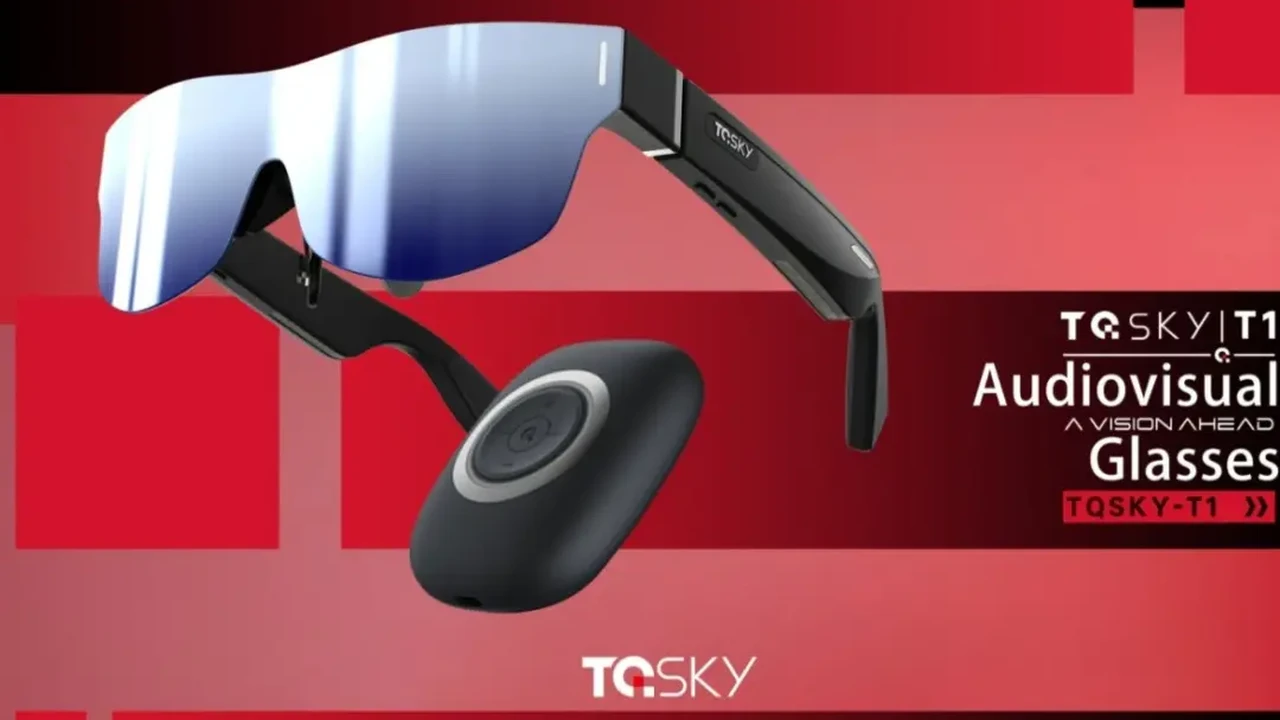
The most immediate and striking difference between smart glasses and VR headsets lies in their design and form factor. Smart glasses, as the name suggests, are designed to resemble traditional eyeglasses. They are typically lightweight, sleek, and aim for a discreet appearance, allowing users to wear them comfortably in public settings without drawing excessive attention. Their primary goal is to augment the user's reality by overlaying digital information onto their view of the real world. This means the user can still see their surroundings clearly while interacting with digital content.
VR headsets, on the other hand, are much bulkier and completely enclose the user's field of vision. They are designed to transport the user into a fully virtual environment, blocking out the real world entirely. This immersive experience is achieved through high-resolution displays placed directly in front of the eyes, often with lenses that create a wide field of view. The design prioritizes immersion over subtlety, making them less suitable for everyday wear in public.
Display Technology and Immersion Smart Glasses vs VR Headsets
The display technology employed in smart glasses and VR headsets is tailored to their respective purposes. Smart glasses typically utilize transparent or semi-transparent displays, such as waveguide optics or micro-LED projectors, to project images directly onto the user's retina or a small screen within the lens. This allows for an augmented reality (AR) experience where digital content appears to coexist with the real world. The level of immersion is generally lower than VR, as the real world remains visible, but the benefit is the ability to interact with digital information while staying aware of one's physical surroundings.
VR headsets, conversely, use opaque, high-resolution displays (often LCD or OLED panels) that completely fill the user's field of view. These displays, combined with specialized lenses, create a sense of presence within a virtual environment. The goal is to achieve maximum immersion, making the user feel as if they are truly in another world. This complete visual isolation is what defines the virtual reality experience.
Primary Use Cases and Applications Smart Glasses vs VR Headsets
The distinct design and display technologies lead to very different primary use cases for smart glasses and VR headsets.
Smart Glasses Applications Everyday Productivity and Information Overlay
Smart glasses excel in scenarios where users need quick access to information or subtle digital assistance without being fully disconnected from their environment. Common applications include:
- Navigation: Displaying turn-by-turn directions directly in the user's line of sight.
- Notifications: Showing incoming calls, messages, or calendar alerts.
- Information Overlay: Providing real-time data, such as product information in a retail setting or historical facts at a museum.
- Hands-Free Communication: Making calls or sending messages using voice commands.
- Workplace Assistance: Guiding technicians through complex repairs or providing instructions in manufacturing.
- Fitness Tracking: Displaying workout metrics during exercise.
VR Headset Applications Immersive Gaming and Virtual Experiences
VR headsets are built for experiences that require full immersion and a complete escape into a digital world. Their primary applications include:
- Gaming: Providing highly immersive gaming experiences where players feel like they are inside the game world.
- Virtual Tours: Exploring virtual renditions of real-world locations or fantastical environments.
- Training and Simulation: Creating realistic training scenarios for pilots, surgeons, or emergency responders.
- Virtual Meetings and Collaboration: Allowing users to meet and interact in virtual spaces, especially useful for remote teams.
- Entertainment: Watching 360-degree videos or virtual concerts.
- Education: Offering interactive and immersive learning experiences, such as virtual field trips.
Connectivity and Processing Power Smart Glasses vs VR Headsets
Both smart glasses and VR headsets rely on robust connectivity and processing power, but their requirements differ based on their intended use. Smart glasses often prioritize energy efficiency and compact components, as they need to be lightweight and have decent battery life for all-day wear. They typically connect to a smartphone via Bluetooth or Wi-Fi for processing power and data access, though some higher-end models have integrated processors. This allows them to perform tasks like displaying notifications, basic navigation, and capturing photos/videos.
VR headsets, especially standalone models, require significantly more processing power to render complex 3D environments in real-time at high frame rates to prevent motion sickness. They often feature powerful mobile processors (like Qualcomm Snapdragon XR platforms) or connect to high-end gaming PCs. Connectivity options include Wi-Fi for standalone operation and USB-C or DisplayPort for PC-tethered headsets. This robust processing enables the detailed graphics and interactive physics necessary for truly immersive virtual experiences.
Popular Models and Price Points Smart Glasses vs VR Headsets
Let's look at some popular examples from both categories to illustrate the differences in features and pricing.
Leading Smart Glasses Models and Their Costs
-
Ray-Ban Stories: These are primarily camera-equipped smart glasses for capturing photos and videos, with integrated audio. They are designed to look like regular Ray-Ban frames. They offer basic smart features like calls and audio playback.
- Use Case: Casual content creation, hands-free calls, music listening.
- Price: Typically around $299 - $329 USD.
-
Amazon Echo Frames: These focus on audio and Alexa integration, allowing users to interact with Amazon's voice assistant, make calls, and listen to audio. They don't have a visual display.
- Use Case: Hands-free Alexa access, audio streaming, calls.
- Price: Around $269.99 USD.
-
Nreal Air: These are more advanced AR glasses that connect to a smartphone or computer to project a large virtual screen in front of the user. They offer a more immersive visual experience than basic smart glasses.
- Use Case: Portable large screen for media consumption, cloud gaming, productivity on the go.
- Price: Approximately $379 USD.
-
Vuzix Blade Upgraded: Aimed at enterprise and prosumer users, these offer a full-color display, camera, and robust app ecosystem. They are more feature-rich than consumer-focused smart glasses.
- Use Case: Workplace assistance, remote support, navigation, information display.
- Price: Around $999 USD.
-
Google Glass Enterprise Edition 2: Primarily for industrial and enterprise use, these provide hands-free access to information, video calls, and workflow instructions for workers.
- Use Case: Manufacturing, logistics, field service, healthcare.
- Price: Typically sold to businesses, often over $1,000 USD per unit.
Leading VR Headset Models and Their Costs
-
Meta Quest 2: One of the most popular standalone VR headsets, offering a vast library of games and experiences without needing a PC. It provides excellent value for its price.
- Use Case: VR gaming, social VR, fitness, virtual meetings.
- Price: Starting around $299 USD (often on sale).
-
Meta Quest 3: The successor to Quest 2, offering improved resolution, processing power, and mixed reality capabilities, blending virtual content with the real world more seamlessly than its predecessor.
- Use Case: Advanced VR gaming, mixed reality experiences, productivity.
- Price: Starting around $499 USD.
-
Valve Index: A high-end PC-tethered VR system known for its wide field of view, high refresh rate, and advanced controllers. It requires a powerful gaming PC.
- Use Case: Premium PC VR gaming, VR development, high-fidelity simulations.
- Price: Full kit around $999 USD.
-
PlayStation VR2: Designed specifically for the PlayStation 5, offering high-fidelity VR gaming experiences with haptic feedback and eye tracking.
- Use Case: Console VR gaming.
- Price: Around $549.99 USD.
-
Pico 4: A standalone VR headset that competes with Meta Quest, offering a slim design and good performance for gaming and entertainment.
- Use Case: Standalone VR gaming, fitness, media consumption.
- Price: Around $429 USD.
Future Outlook and Convergence Smart Glasses vs VR Headsets
While smart glasses and VR headsets currently serve distinct purposes, the lines between them are beginning to blur. The emergence of mixed reality (MR) devices, like the Meta Quest 3 and Apple Vision Pro, represents a significant step towards convergence. These devices offer both full VR immersion and the ability to pass through the real world, overlaying digital content onto it. This allows for a spectrum of experiences, from fully virtual to highly augmented.
The future of wearable technology likely involves more sophisticated smart glasses that can offer richer AR experiences, potentially even transitioning into full VR modes when needed, all within a more compact and stylish form factor. Advances in display technology, battery life, and processing power will be key to achieving this. As these technologies mature, we can expect more seamless integration of digital information into our daily lives, whether for productivity, entertainment, or communication.
Making Your Informed Decision Smart Glasses vs VR Headsets
Ultimately, the choice between smart glasses and a VR headset depends entirely on your intended use and priorities. If you're looking for subtle digital assistance, hands-free information access, and a device you can wear comfortably throughout your day without being cut off from your surroundings, smart glasses are likely the better choice. They are about enhancing your reality.
If your goal is to escape into fully immersive digital worlds for gaming, virtual tours, or highly interactive simulations, then a VR headset is what you need. They are about creating an entirely new reality. Consider your budget, the specific applications you have in mind, and how much immersion versus real-world awareness you desire. Both technologies offer incredible potential, but they cater to different facets of our digital lives.
:max_bytes(150000):strip_icc()/277019-baked-pork-chops-with-cream-of-mushroom-soup-DDMFS-beauty-4x3-BG-7505-5762b731cf30447d9cbbbbbf387beafa.jpg)