Smart Glasses for Specific Professions A Detailed Look
Explore how smart glasses are being utilized in various professions and which models are best suited.
Explore how smart glasses are being utilized in various professions and which models are best suited.
Smart Glasses for Specific Professions A Detailed Look
Revolutionizing Healthcare with Smart Glasses
Smart glasses are no longer just a futuristic gadget; they're becoming indispensable tools across a multitude of professions. In healthcare, for instance, these devices are truly revolutionizing how medical professionals operate. Imagine a surgeon performing a complex procedure, with vital patient data, 3D anatomical models, or even a live feed from a remote specialist projected directly into their field of view. This hands-free access to information can significantly enhance precision, reduce errors, and improve patient outcomes. For nurses, smart glasses can streamline tasks like medication administration by providing instant access to patient records and dosage information, minimizing the risk of mistakes. During rounds, they can quickly document observations or consult with colleagues without needing to step away from the patient.
Beyond the operating room and patient care, smart glasses are also proving invaluable in medical training. Students can observe surgeries from a first-person perspective, gaining an unparalleled understanding of procedures. Remote consultations are another major benefit, allowing specialists to guide local practitioners in underserved areas, effectively extending expert care globally. This is particularly crucial in emergency situations where immediate, specialized advice can be life-saving.
Recommended Smart Glasses for Healthcare Professionals
- Microsoft HoloLens 2: This mixed reality headset is a powerhouse for healthcare. Its advanced optics and spatial mapping capabilities allow for highly realistic 3D overlays, perfect for surgical planning, anatomical visualization, and remote assistance. It integrates seamlessly with existing hospital systems and offers robust security features.
- Use Cases: Surgical visualization, remote expert guidance, medical training, patient education.
- Comparison: Offers superior mixed reality capabilities compared to most AR-only glasses, but comes at a higher price point.
- Estimated Price: $3,500 - $5,000+ (Enterprise Edition)
- Vuzix M400/M4000: These industrial-grade smart glasses are rugged and designed for demanding environments. They offer excellent camera quality for remote collaboration and are comfortable for extended wear. Their open Android platform allows for custom application development, making them highly adaptable to specific medical workflows.
- Use Cases: Remote patient monitoring, telemedicine, field diagnostics, medical device maintenance.
- Comparison: More affordable and durable than HoloLens 2, focusing on remote assistance and data display rather than full mixed reality.
- Estimated Price: $1,500 - $2,500
- Google Glass Enterprise Edition 2: While not as visually immersive as HoloLens, Google Glass offers a lightweight and discreet form factor, making it suitable for less intensive, hands-free information access. Its focus is on quick data retrieval and communication.
- Use Cases: Accessing patient records, quick consultations, hands-free documentation, training.
- Comparison: Most discreet and lightweight, ideal for quick information access without obstructing vision significantly. Less powerful for complex AR.
- Estimated Price: $999 - $1,500
Boosting Efficiency in Manufacturing and Logistics with Smart Glasses
In the manufacturing and logistics sectors, smart glasses are transforming operational efficiency, safety, and training. Workers on assembly lines can receive step-by-step instructions, schematics, and quality control checklists directly in their field of vision, reducing errors and speeding up production. This 'assisted reality' approach minimizes the need to consult manuals or computer screens, keeping hands free for the task at hand. For quality assurance, smart glasses can overlay digital templates onto physical products, allowing for immediate identification of defects or deviations from specifications.
In warehouses and logistics, smart glasses are streamlining order picking, inventory management, and package sorting. Pickers can receive navigation instructions to specific locations and see the items they need to retrieve, all hands-free. This not only increases picking accuracy but also significantly reduces the time spent searching for items. Real-time data updates mean inventory levels are always accurate, preventing stockouts or overstocking. Furthermore, for maintenance and repair technicians, smart glasses enable remote experts to guide them through complex repairs, reducing downtime and travel costs.
Top Smart Glasses for Industrial Applications
- Vuzix M400/M4000: As mentioned, these are workhorses for industrial settings. Their robust design, powerful processor, and excellent camera make them ideal for remote assistance, guided workflows, and data capture in challenging environments.
- Use Cases: Assembly line guidance, quality control, remote maintenance, inventory management, training.
- Comparison: Known for durability and enterprise-focused features, a strong contender for hands-on industrial work.
- Estimated Price: $1,500 - $2,500
- RealWear HMT-1/HMT-1Z1: These are purpose-built for industrial use, featuring a fully voice-controlled interface, making them truly hands-free. They are rugged, drop-proof, dust-proof, and water-resistant, with the HMT-1Z1 being intrinsically safe for hazardous environments.
- Use Cases: Remote inspection, guided work instructions, safety compliance, hazardous environment operations.
- Comparison: Unmatched ruggedness and voice control for extreme industrial conditions.
- Estimated Price: $2,000 - $2,500 (HMT-1), $5,000+ (HMT-1Z1)
- Epson Moverio BT-300/BT-400: These smart glasses offer transparent Si-OLED displays, providing a clear view of the real world while overlaying digital information. They are lighter than some industrial models and are well-suited for applications where visual clarity and comfort are paramount, such as visual inspection or detailed assembly.
- Use Cases: Visual inspection, detailed assembly, augmented reality training, remote support.
- Comparison: Excellent display clarity for AR overlays, more comfortable for longer wear than some heavier industrial units.
- Estimated Price: $700 - $1,500
Enhancing Education and Training with Smart Glasses
The education sector is ripe for disruption by smart glasses, offering immersive and interactive learning experiences that go beyond traditional methods. Imagine students exploring historical sites in 3D, dissecting virtual organs in biology class, or practicing complex engineering tasks with augmented reality overlays. Smart glasses can bring abstract concepts to life, making learning more engaging and effective. For vocational training, they provide a safe and cost-effective way to simulate real-world scenarios, allowing trainees to practice skills without the risks or expenses associated with physical equipment. For example, an aspiring mechanic could practice engine repair with virtual tools and components, receiving real-time feedback.
Remote learning also gets a significant boost. Instructors can deliver lectures with interactive 3D models, and students can collaborate on projects in shared virtual spaces, regardless of their physical location. This opens up new possibilities for global classrooms and specialized training programs. Furthermore, for field trips or practical demonstrations, smart glasses can provide contextual information, historical facts, or scientific data directly to the wearer, enriching the learning experience on the go.
Best Smart Glasses for Educational Settings
- Nreal Air: While primarily consumer-focused, Nreal Air's lightweight design and excellent display make them suitable for educational content consumption and light AR applications. They are comfortable for students to wear for extended periods and can project large virtual screens for lectures or multimedia.
- Use Cases: Immersive lectures, virtual field trips, multimedia consumption, basic AR learning apps.
- Comparison: More affordable and consumer-friendly than enterprise-grade options, good for content viewing.
- Estimated Price: $379 - $599
- Lenovo ThinkReality A3: This is a more robust option for professional training and higher education. It offers a powerful platform for creating and deploying complex AR applications, making it suitable for engineering, medical, or technical training programs.
- Use Cases: Vocational training, engineering simulations, medical education, remote collaboration for projects.
- Comparison: Enterprise-grade features for serious AR development and deployment in educational contexts.
- Estimated Price: $1,499 - $2,000+
- Microsoft HoloLens 2: Again, its mixed reality capabilities make it a top choice for advanced educational simulations, especially in fields like medicine, architecture, and complex engineering, where highly realistic 3D interaction is crucial.
- Use Cases: Advanced medical training, architectural visualization, complex engineering simulations, research.
- Comparison: The most advanced for true mixed reality and interactive 3D learning experiences, but also the most expensive.
- Estimated Price: $3,500 - $5,000+
Transforming Retail and Customer Experience with Smart Glasses
In the competitive retail landscape, smart glasses are emerging as a powerful tool to enhance both employee efficiency and customer experience. For retail associates, smart glasses can provide instant access to product information, inventory levels, customer profiles, and even personalized recommendations. Imagine a sales assistant helping a customer, and with a glance, they can see if an item is in stock in another size or color, or quickly pull up customer purchase history to offer tailored suggestions. This hands-free access to data allows them to remain engaged with the customer, providing a more seamless and informed shopping experience.
Beyond sales, smart glasses can streamline back-of-house operations. For example, in large retail spaces, they can guide employees to specific product locations for restocking or order fulfillment, reducing search times. For visual merchandising, AR overlays can help employees visualize new store layouts or product placements before physically moving items. For customers, while still nascent, smart glasses could offer augmented shopping experiences, such as virtual try-ons for clothing or furniture, or interactive product information displayed directly on items as they browse. This could lead to a more engaging and personalized retail journey.
Smart Glasses for Retail and Customer Service
- Vuzix Blade Upgraded: These consumer-friendly smart glasses offer a sleek design and a vibrant display, making them suitable for customer-facing roles where discretion and style are important. They can display product information, inventory, or even translate languages for international customers.
- Use Cases: Sales assistance, inventory checks, customer information lookup, visual merchandising.
- Comparison: More stylish and less industrial than other Vuzix models, good for direct customer interaction.
- Estimated Price: $799 - $999
- Google Glass Enterprise Edition 2: Its lightweight and unobtrusive design makes it ideal for retail associates who need quick, hands-free access to information without distracting from customer interaction.
- Use Cases: Quick product lookups, stock checks, customer service support, training new employees.
- Comparison: Excellent for discreet information display and communication in a fast-paced retail environment.
- Estimated Price: $999 - $1,500
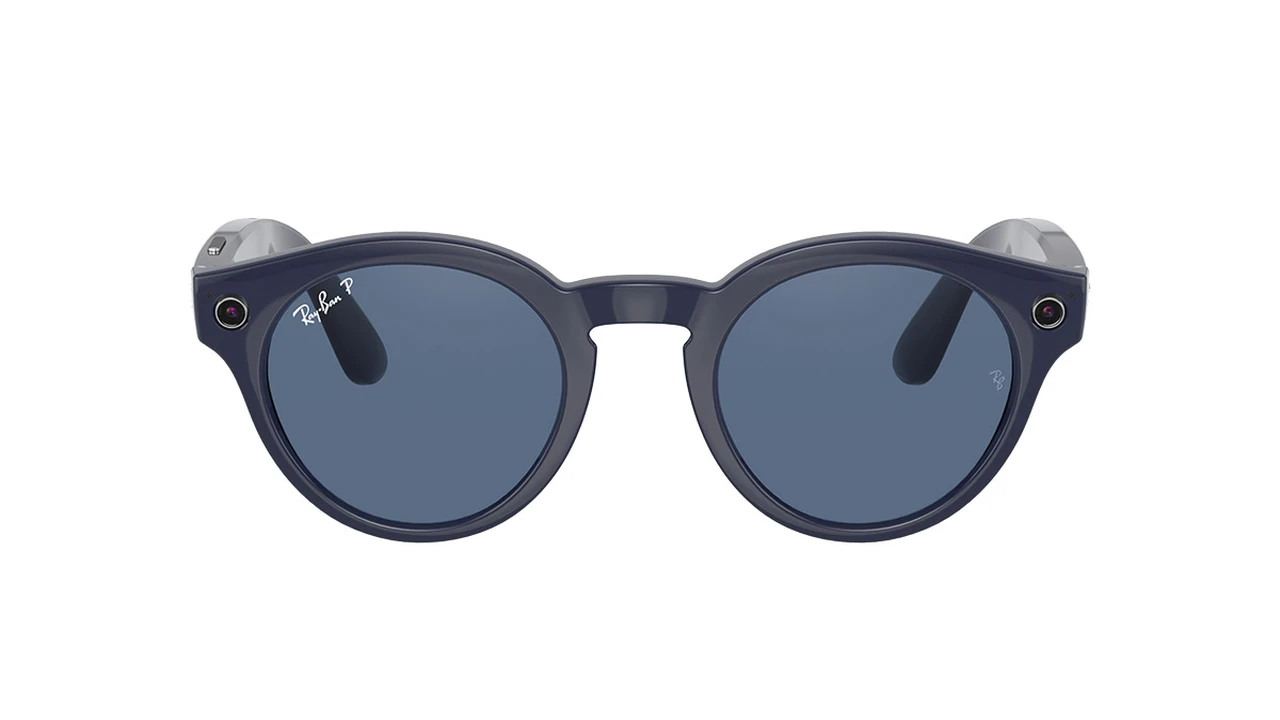
- Ray-Ban Stories: While primarily for capturing photos and videos, these could be used in a retail context for visual merchandising documentation or quick visual communication among staff. Their fashionable design makes them blend in seamlessly.
- Use Cases: Visual merchandising documentation, quick photo/video communication among staff, discreet observation.
- Comparison: Focuses on camera and audio, less on AR overlays, but highly fashionable and discreet.
- Estimated Price: $299 - $379
Innovating Field Service and Remote Assistance with Smart Glasses
For field service technicians, engineers, and maintenance crews, smart glasses are a game-changer. When a complex piece of machinery breaks down in a remote location, getting an expert on-site can be costly and time-consuming. Smart glasses enable remote experts to see exactly what the local technician sees, in real-time, and provide visual guidance, annotations, and instructions directly into the technician's field of view. This 'see-what-I-see' capability drastically reduces resolution times, minimizes travel expenses, and improves first-time fix rates.
Beyond remote assistance, smart glasses can provide technicians with digital checklists, schematics, and repair manuals, ensuring they have all the necessary information at their fingertips, hands-free. This is particularly useful for complex equipment with numerous components. For inspections, smart glasses can guide technicians through a systematic process, ensuring no steps are missed and automatically documenting findings through photos or videos. The ability to capture and share visual evidence of issues or completed work also enhances accountability and record-keeping. This technology is not just about fixing things faster; it's about empowering the workforce with immediate access to expertise and information, leading to higher productivity and customer satisfaction.
Leading Smart Glasses for Field Service and Remote Assistance
- RealWear HMT-1/HMT-1Z1: These are arguably the industry standard for remote assistance in rugged environments. Their voice-controlled interface means technicians can operate them completely hands-free, even while wearing gloves or in noisy conditions. The high-resolution camera is excellent for sharing live video with remote experts.
- Use Cases: Remote expert guidance, guided maintenance procedures, equipment inspection, troubleshooting.
- Comparison: Best-in-class for voice control and ruggedness, ideal for hands-on, dirty, or dangerous work.
- Estimated Price: $2,000 - $2,500 (HMT-1), $5,000+ (HMT-1Z1)
- Vuzix M400/M4000: Another strong contender, offering a balance of ruggedness, processing power, and a good camera for remote collaboration. They are comfortable for extended wear and support a wide range of enterprise applications.
- Use Cases: Remote diagnostics, guided repairs, field data collection, quality assurance in the field.
- Comparison: Versatile and robust, a solid choice for general field service applications.
- Estimated Price: $1,500 - $2,500
- TeamViewer Frontline (Software Solution): While not a hardware product, TeamViewer Frontline is a leading software platform specifically designed for smart glasses-based remote assistance. It integrates with various smart glasses hardware (like RealWear, Vuzix, HoloLens) to provide powerful AR-powered remote support, workflow guidance, and training.
- Use Cases: Remote assistance, guided workflows, digital checklists, training.
- Comparison: A software solution that enhances the capabilities of various smart glasses hardware, focusing on enterprise-grade remote support.
- Estimated Price: Subscription-based, varies by user/device count.
The Future is Clear Smart Glasses Across Industries
The adoption of smart glasses across various professions is not just a trend; it's a fundamental shift in how work is performed. From enhancing precision in surgery to streamlining logistics in warehouses, and from revolutionizing education to empowering field technicians, these devices are proving their worth by providing hands-free access to critical information, enabling remote collaboration, and creating immersive training experiences. As the technology continues to evolve, becoming more powerful, comfortable, and affordable, we can expect to see smart glasses become an even more ubiquitous tool in the professional toolkit, driving efficiency, safety, and innovation across countless industries. The integration of AI, improved battery life, and more seamless connectivity will only accelerate this adoption, making smart glasses an indispensable part of the modern workforce.
:max_bytes(150000):strip_icc()/277019-baked-pork-chops-with-cream-of-mushroom-soup-DDMFS-beauty-4x3-BG-7505-5762b731cf30447d9cbbbbbf387beafa.jpg)