Smart Glasses and the Metaverse Bridging Realities
Discover the pivotal role smart glasses will play in the development and experience of the metaverse.
Discover the pivotal role smart glasses will play in the development and experience of the metaverse.
Smart Glasses and the Metaverse Bridging Realities
Hey there, tech enthusiasts! Let's dive into something truly exciting: the intersection of smart glasses and the metaverse. It's not just a buzzword anymore; it's a rapidly evolving landscape where our digital and physical worlds are starting to blend in ways we've only dreamed of. And guess what's at the forefront of making this happen? You guessed it: smart glasses. These aren't just fancy spectacles; they're our potential windows into a richer, more interactive digital future.
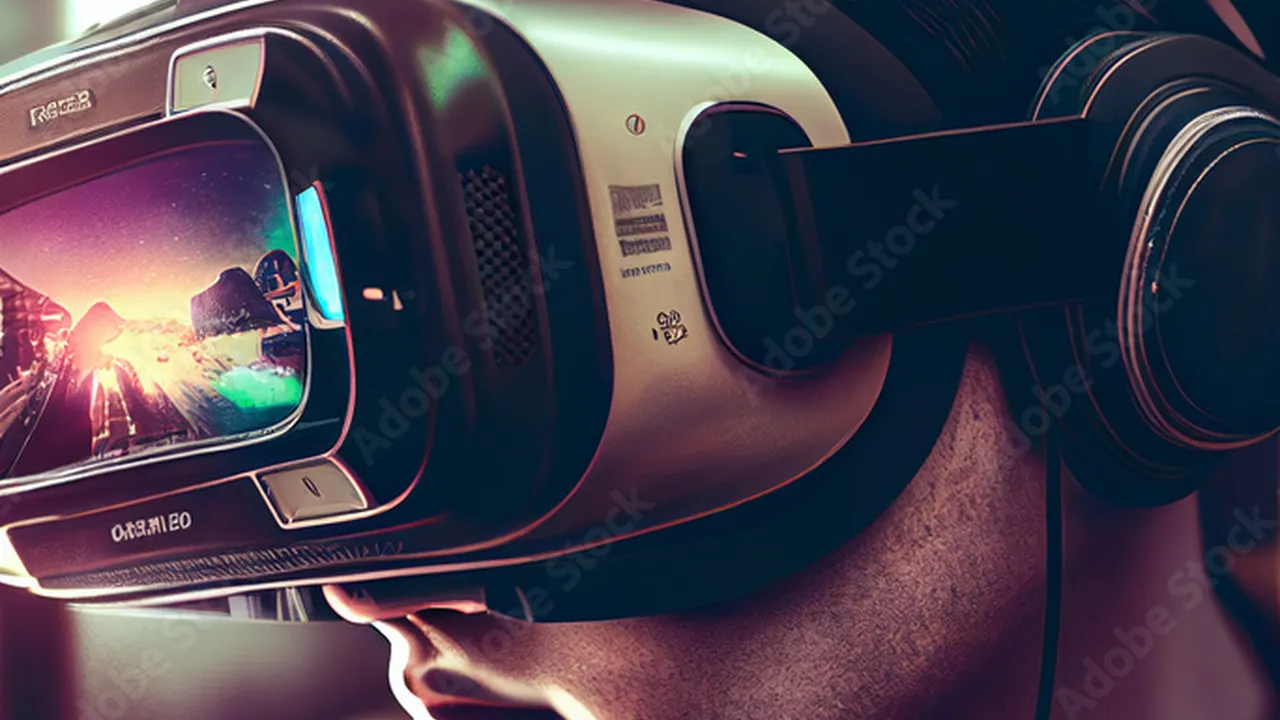
Think about it. The metaverse, in its simplest form, is a persistent, interconnected virtual world where users can interact with each other, digital objects, and AI-driven entities. It's a place for work, play, learning, and socializing. But how do we truly step into it? While VR headsets offer an immersive, albeit often isolating, experience, smart glasses promise something different: an augmented reality (AR) layer over our existing world. This means the metaverse isn't just a place you visit; it's a layer that enhances your everyday reality.
Understanding the Metaverse and Smart Glasses Synergy
So, what exactly is the synergy here? Smart glasses are poised to be the primary interface for the metaverse, especially for its AR manifestations. Instead of being fully immersed in a virtual world, smart glasses allow digital content to be overlaid onto your real-world view. Imagine walking down the street and seeing digital directions floating above the pavement, or attending a virtual meeting where colleagues appear as holograms in your living room. This is the promise of the metaverse through smart glasses.
The key difference lies in presence. VR takes you out of your physical environment. AR, powered by smart glasses, brings the digital into your physical environment. This 'blended reality' is what many believe will be the most impactful and widely adopted form of the metaverse for daily use. It's about enhancing, not replacing, our reality.
Key Technologies Enabling Metaverse Smart Glasses
For smart glasses to truly unlock the metaverse, several technological advancements are crucial. We're talking about a convergence of cutting-edge hardware and sophisticated software.
Advanced Display Technologies for Immersive Metaverse Experiences
The display is paramount. We need displays that are bright, high-resolution, and offer a wide field of view without being bulky. Technologies like micro-LED and waveguide optics are leading the charge here. Micro-LEDs offer incredible brightness and efficiency in tiny packages, perfect for the small form factor of glasses. Waveguide optics allow for projecting images directly onto the lens, making the glasses look more like regular eyewear while still delivering a vibrant digital overlay. Companies like Vuzix and Nreal are already pushing the boundaries with their display tech, offering impressive visual fidelity in their current smart glasses.
Powerful Processors and AI for Seamless Metaverse Interactions
Processing power is another big one. Running complex AR applications and rendering detailed metaverse environments requires significant computational muscle, all within a small, power-efficient chip. This is where custom-designed System-on-Chips (SoCs) come into play, often incorporating dedicated AI accelerators. These AI capabilities are vital for tasks like object recognition, spatial mapping, and natural language processing, allowing the smart glasses to understand your environment and your commands seamlessly. Qualcomm's Snapdragon XR platforms are a prime example of the kind of processing power being developed for extended reality devices, including smart glasses.
Connectivity and Low Latency for Real-time Metaverse Data
For a truly interactive metaverse, low-latency connectivity is non-negotiable. This is where 5G comes in. Its high bandwidth and minimal delay are essential for streaming rich metaverse content, interacting with remote users in real-time, and accessing cloud-based AI services without noticeable lag. Imagine trying to play a metaverse game or collaborate on a virtual project with a delay – it just wouldn't work. Wi-Fi 6E and future wireless standards will also play a significant role in ensuring robust local connectivity.
Sensors and Spatial Computing for Metaverse Environment Understanding
Smart glasses need to understand their physical surroundings to accurately place digital objects. This requires an array of sensors: cameras for visual tracking, depth sensors for 3D mapping, accelerometers and gyroscopes for head tracking, and even eye-tracking sensors for intuitive interaction. Spatial computing, the ability to process and interact with data in a 3D space, is the software layer that makes sense of all this sensor data, allowing for persistent digital content that stays anchored in your real world, even when you move around.
Current Smart Glasses Paving the Way for the Metaverse
While the full vision of the metaverse is still unfolding, several smart glasses are already giving us a glimpse of what's possible. These devices, though perhaps not yet 'metaverse-ready' in the broadest sense, are building the foundational technologies and user experiences.
Nreal Air Smart Glasses
The Nreal Air, for example, is a popular choice for media consumption and light productivity. They're relatively lightweight and connect to your smartphone, projecting a large virtual screen in front of you. While not full AR in the sense of interacting with your environment, they demonstrate the potential for portable, personal displays that could easily become windows into metaverse content. They retail for around $379 USD and are great for watching movies on a '130-inch screen' or doing some work on a virtual monitor while on the go. Their use case is primarily personal entertainment and productivity, offering a private viewing experience.
Vuzix Blade Upgraded Smart Glasses
Vuzix has been a long-standing player in the smart glasses space, particularly for enterprise applications. Their Vuzix Blade Upgraded smart glasses offer a full-color waveguide display and integrate with Alexa. They're more robust than consumer-focused glasses and are often used for remote assistance, workflow guidance, and data visualization in industrial settings. While their price point is higher, typically around $999 USD, they showcase the potential for AR overlays in practical, real-world scenarios, which is a core component of the metaverse. Their use case leans heavily towards professional and industrial applications, demonstrating how digital information can enhance physical tasks.
Ray-Ban Stories Smart Glasses
Then there are the Ray-Ban Stories, a collaboration between Meta (formerly Facebook) and EssilorLuxottica. These are designed to look like regular Ray-Ban sunglasses, with integrated cameras, speakers, and microphones. Their primary function is hands-free photo and video capture, and audio playback. While they don't offer a visual AR overlay, they represent a crucial step towards integrating technology seamlessly into everyday eyewear. They retail for about $299 USD. Their use case is social sharing and casual audio, proving that people are willing to wear smart glasses if they look good and offer convenient features. This 'social' aspect is vital for the metaverse's adoption.
Microsoft HoloLens 2
On the higher end, we have the Microsoft HoloLens 2. This is a full-fledged mixed reality headset, primarily aimed at enterprise and industrial use. It offers a wide field of view, advanced spatial mapping, and hand tracking, allowing users to interact with holograms in their physical space. While bulky and expensive (around $3,500 USD), it's arguably the closest we have to a true metaverse-ready device today, demonstrating complex AR interactions for design, training, and remote collaboration. Its use case is highly specialized, showing the power of true mixed reality for complex tasks.
Magic Leap 2
Similar to HoloLens, Magic Leap 2 is another enterprise-focused AR headset. It boasts a larger field of view and dynamic dimming, allowing for better contrast of digital content in varying lighting conditions. It's also designed for professional use cases like healthcare, manufacturing, and defense, offering robust AR capabilities for visualization and interaction. Priced similarly to HoloLens 2, it's another example of high-end hardware pushing the boundaries of what's possible in augmented reality, laying groundwork for future metaverse applications. Its use case is also highly specialized, focusing on professional AR applications.
The Metaverse Experience Through Smart Glasses Use Cases
So, what will actually happen when we put on these metaverse-enabled smart glasses? The possibilities are vast and exciting.
Enhanced Social Interaction in the Metaverse
Imagine meeting friends in a virtual cafe that's overlaid onto your actual living room, or attending a concert where the band appears as holograms right in front of you. Smart glasses will enable more natural and immersive social interactions in the metaverse, blending digital avatars with real-world environments. You could see digital 'thought bubbles' above people's heads, or instantly translate conversations with foreign speakers appearing as subtitles in your field of view.
Productivity and Collaboration in the Metaverse Workplace
For work, smart glasses could revolutionize remote collaboration. Instead of staring at a 2D screen, you could have virtual whiteboards floating in your office, or 3D models of products you're designing appearing right on your desk. Colleagues could appear as realistic avatars, making remote meetings feel much more personal and engaging. Think about architects walking through a virtual building design in their actual office, or engineers collaborating on a complex machine assembly as if they were in the same room.
Gaming and Entertainment in the Augmented Metaverse
Gaming will be transformed. Instead of being confined to a screen, games could spill out into your living room or even your neighborhood. Imagine a Pokémon Go-like experience, but with much more realistic and interactive digital creatures appearing in your park. Or a virtual board game that plays out on your coffee table with animated pieces. Entertainment could also involve interactive stories that unfold around you, or personalized digital art installations that appear in public spaces.
Learning and Training with Metaverse Smart Glasses
Education could become incredibly immersive. Students could dissect virtual frogs in biology class, explore ancient ruins as if they were there, or learn complex procedures with step-by-step holographic instructions. For professional training, smart glasses could simulate dangerous scenarios or allow for hands-on practice with virtual equipment, reducing costs and risks. Medical students could practice surgery on holographic patients, or mechanics could learn to repair engines with overlaid instructions.
Shopping and Commerce in the Blended Metaverse
Shopping could also get a metaverse makeover. You could try on virtual clothes that appear on your body, see how furniture looks in your home before buying it, or get real-time information about products as you browse a physical store. This blended retail experience could make online shopping more engaging and reduce returns. Imagine seeing reviews and product details floating next to items on a supermarket shelf, or trying on virtual shoes that perfectly fit your feet.
Challenges and Considerations for Metaverse Smart Glasses
It's not all sunshine and holograms, though. There are significant hurdles to overcome before smart glasses become our ubiquitous metaverse interface.
Battery Life and Form Factor Limitations
Current smart glasses often struggle with battery life, especially when running demanding AR applications. And let's be honest, many still look a bit clunky. For widespread adoption, they need to be comfortable, stylish, and last a full day on a single charge. Miniaturization of components and advancements in battery technology are critical here.
Privacy and Security Concerns in the Metaverse
With cameras and sensors constantly capturing data about our environment and interactions, privacy is a huge concern. Who owns this data? How is it used? Ensuring robust security measures and clear privacy policies will be essential for building user trust. Imagine your smart glasses constantly recording your surroundings – the implications are vast.
Interoperability and Open Standards for the Metaverse
For a truly open metaverse, different smart glasses and platforms need to be able to communicate and share content seamlessly. This requires open standards and protocols, preventing a fragmented 'walled garden' approach where different metaverse experiences are incompatible. We don't want a situation where content created for one pair of smart glasses can't be accessed on another.
User Adoption and Affordability of Smart Glasses
Finally, smart glasses need to be affordable and offer compelling value propositions for the average consumer. The 'killer app' for smart glasses in the metaverse is still emerging, and until it does, widespread adoption might be slow. Prices need to come down significantly from the enterprise-grade devices to reach a mass market.
The Road Ahead for Smart Glasses and the Metaverse
The journey to a fully realized metaverse, accessible through sleek and powerful smart glasses, is a marathon, not a sprint. We're seeing incredible progress in display technology, processing power, and sensor integration. Companies like Meta, Apple (with rumored AR glasses), Google, and countless startups are pouring resources into this space, recognizing its immense potential.
The future of smart glasses in the metaverse isn't just about technology; it's about how we choose to integrate digital experiences into our lives. It's about creating a blended reality that enhances our human connections, productivity, and entertainment, without overwhelming us. As these devices become more sophisticated, comfortable, and affordable, they will undoubtedly become our primary gateway to a richer, more interactive digital world, blurring the lines between what's real and what's digitally enhanced. Get ready to step into a new reality!
:max_bytes(150000):strip_icc()/277019-baked-pork-chops-with-cream-of-mushroom-soup-DDMFS-beauty-4x3-BG-7505-5762b731cf30447d9cbbbbbf387beafa.jpg)